 ultimate-guide
Best Coffee for Drip Machines: A Bean-to-Brew Guide
Last Updated: October 26, 2026
Quick Summary
Medium roast whole bean coffee is the best coffee for drip machines, ideally a balanced Arabica from Colombia, Brazil, or Costa Rica. Start at a medium grind and a 1:16 coffee-to-water ratio, then adjust one variable at a time. Fresh beans and a burr grinder matter more than the machine itself.
- Medium roast is the safest starting point for drip brewing, offering balance and forgiveness across machines.
- Start at 1 gram of coffee per 16 grams of water, roughly one rounded tablespoon per 6 ounces.
- Use a medium grind between coarse French press and fine espresso, and adjust one step at a time.
- A burr grinder produces more consistent particles than a blade grinder, separating a clean cup from a muddy one.
- Every bag from Artificial Horizon Coffee Company is $25.99, available in 12oz through 5 LB.
Table of Contents
- Why Bean Choice Decides Drip Coffee Quality
- Matching Roast Profile to Your Drip Machine
- Whole Bean vs Pre-Ground for Drip Brewing
- Coffee Grind Size for Drip Coffee Maker Performance
- The Coffee to Water Ratio for Drip Machines That Works
- Single Origin vs Blends in an Automatic Drip Brewer
- Water Chemistry and Machine Calibration: The Variables Most Brewers Miss
- Building Your Drip Coffee Order
- Frequently Asked Questions
Why Bean Choice Decides Drip Coffee Quality
Most automatic drip machines are more capable than their owners think. The machine controls water temperature and brew repeatability, but the bean sets the ceiling on sweetness, body, mouthfeel, and acidity.
Testing volume backs up how much rides on that choice. According to Consumer Reports' 2026 coffee maker roundup, the publication evaluated more than 160 coffee makers to identify top drip models, and Forbes Vetted's 2026 testing reviewed more than 30 popular models.
Stale beans, a mismatched roast, or an inconsistent grind will flatten a $200 brewer's output faster than any machine defect. Below, we break down roast, grind, ratio, water chemistry, and storage so your drip setup performs at its limit.
Matching Roast Profile to Your Drip Machine
Medium roast is the safest starting point for drip brewing. A balanced medium roast carries enough soluble material to extract fully in a standard brew cycle while keeping sweetness and acidity intact.
Our House Blend is a medium roast built for exactly this: Central and South American coffees with nutty notes, sweet chocolate, mild citrus, and a clean finish. If you want a concrete starting point, explore the House Blend medium roast and compare it against what you currently brew.

Medium Roast vs Dark Roast for Drip Coffee
Medium roast wins on versatility; dark roast is not wrong, just narrower. Darker beans are less dense and more oily, so they extract faster and can turn bitter on a long cycle or fine grind.
For dark-roast drinkers, our Sumatra brings medium acidity, a syrupy body, dark chocolate, dried fruit, and an earthy, lingering finish. Compare the Sumatra dark roast if you want that profile without guessing.
Best for: medium roast, if you want balance and forgiveness across machines. Skip if: you consistently prefer heavy body and low acidity, where a dark roast serves you better.
Whole Bean vs Pre-Ground for Drip Brewing
Whole bean is the better choice for drip brewing because grind consistency and freshness both degrade after grinding. Once ground, oxidation accelerates and the aromatics that create tasting notes evaporate within days.
The practical rule: buy whole bean if you brew more than twice a week and own any grinder. Buy pre-ground only if you brew occasionally or travel with a machine. Our coffees ship in whole bean, standard grind, or espresso grind, so you can choose either path at checkout.
Coffee Grind Size for Drip Coffee Maker Performance
Medium grind is the correct starting point for most automatic drip machines, between coarse French press and fine espresso.
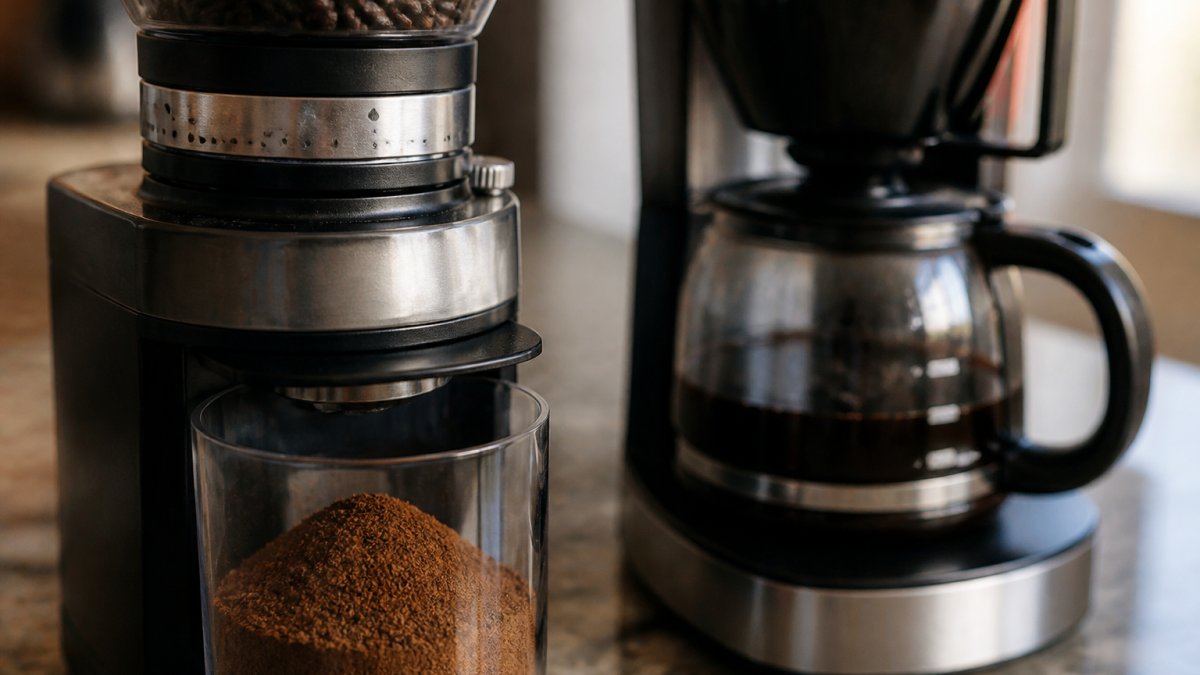
A burr grinder produces far more consistent particles than a blade grinder, and that consistency separates a clean cup from a muddy one. If your basket overflows or the cycle stalls, the grind is too fine, not the machine.
Match Grind to Your Machine Type, Not Just the Method
Most guides stop at "medium grind" and never address what separates one drip machine from another: how it heats and holds water.
Thermal-carafe machines hold coffee at temperature in a double-walled stainless carafe.
Glass-carafe machines with a warming plate keep the carafe hot after brewing.
Single-serve and pod-compatible drip machines are a separate case. Their baskets and cycles are built around a fixed dose, so grind is largely out of your control unless the machine accepts a reusable basket.
Particle Size and the Numbers Behind "Medium"
"Medium" is a range, not a point. On a numbered burr grinder, medium typically falls in the middle third of the scale, and the practical target feels like coarse sand or table salt between your fingers. Start at the midpoint and adjust one step at a time, tasting after each change, rather than jumping several settings at once.
Three signals tell you the grind is off before you even taste the cup:
- Brew time: if the cycle finishes noticeably faster than the machine's rated brew time, the grind is too coarse and water is channeling through.
- Basket overflow or stall: if water backs up in the basket or the cycle slows to a crawl, the grind is too fine and the filter is clogging.
- Sediment in the carafe: fine particles passing through the paper filter usually mean the grind is too fine or the filter is not seated correctly.
Why a Burr Grinder Is the Real Upgrade
A blade grinder chops beans into a mix of dust and boulders. The dust over-extracts and turns bitter while the boulders under-extract and taste sour, so the cup lands muddy no matter the setting. A burr grinder crushes beans between two surfaces at a fixed gap, producing a narrower particle distribution.
If you are not ready to buy a burr grinder, buy pre-ground coffee at a medium drip grind and finish the bag within a few weeks. Our coffees ship in whole bean, standard grind, or espresso grind, so you can choose the path that matches your equipment at checkout.
The Coffee to Water Ratio for Drip Machines That Works
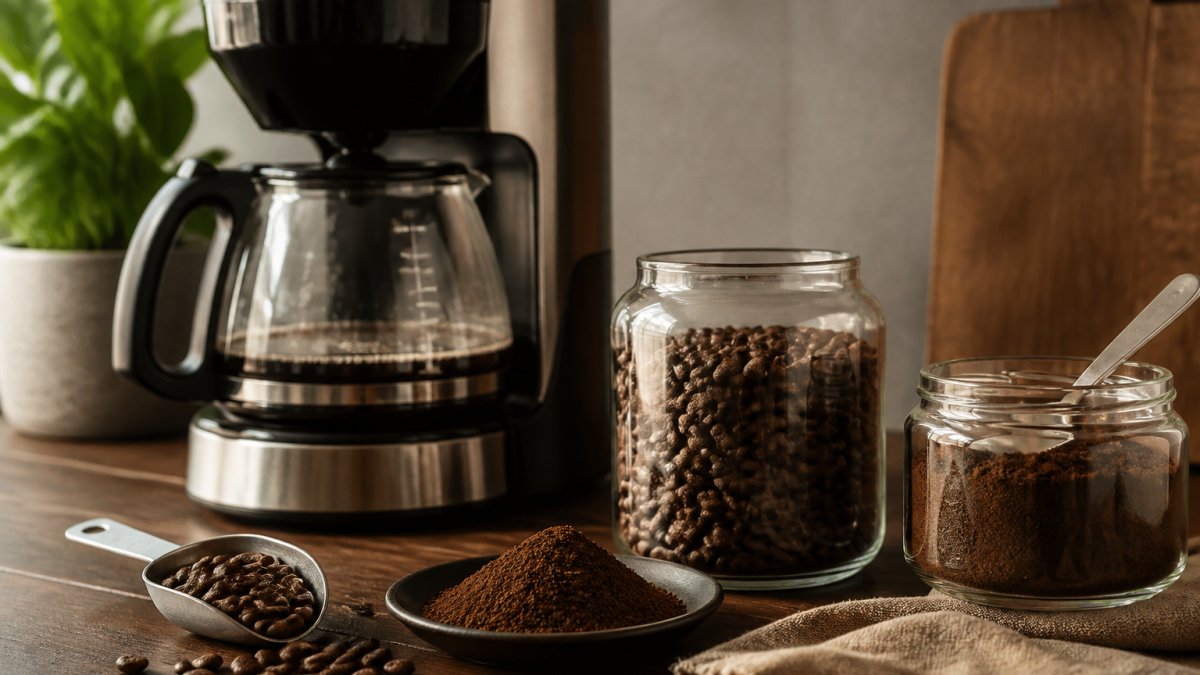
Start at 1 gram of coffee per 16 grams of water, roughly one rounded tablespoon per 6 ounces. That coffee to water ratio for drip machines lands in the standard range most machines are calibrated around, giving you a baseline rather than a guess.
Change one variable at a time. If the cup tastes weak or thin, tighten toward 1:15. If it tastes bitter or drying, loosen toward 1:17. Weigh your coffee for a week before trusting scoops; volume measurements vary enough to swing extraction noticeably, and the scale removes that noise permanently.
Single Origin vs Blends in an Automatic Drip Brewer
Blends are the more forgiving choice in an automatic drip brewer. A blend draws from two or more origins, balanced so the cup holds together across brewers and ratios.
Our single origins reward attention. Brazil Santos delivers an elegant, smooth cup with cocoa notes from pulped natural processing, and try the Brazil Santos single origin if you want to taste one origin cleanly through a drip machine.
Best for: blends if you want consistency; single origin if you want to taste a place. Skip if: you are still dialing in grind and ratio, where a blend hides mistakes a single origin exposes.
Water Chemistry and Machine Calibration: The Variables Most Brewers Miss
Water chemistry and machine calibration are the two variables most drip owners never touch, and they explain many "my good beans taste flat" complaints. Coffee is roughly 98% water, so mineral content shapes extraction and flavor. Too soft under-extracts and tastes hollow; too hard mutes acidity and leaves scale.
Calibration is the other half. Cheap drip machines often brew below the ideal temperature range, and a fast cycle under-extracts regardless of grind. Simple test: brew a cup, let it cool to warm, and taste. Sour and thin means under-extracted, so grind finer or dose higher.
On sourcing, we publish origin, grower, altitude, and processing details on each coffee page so you can verify what you are buying rather than trust a label claim.
How Minerals Interact With Roast Level
Most guides treat water as a single "good or bad" variable. More useful: water chemistry and roast level interact, and the same water can flatter one roast and flatten another.
The minerals that matter most are calcium and magnesium, with bicarbonate as a buffer. Magnesium pulls out fruity, bright compounds; calcium supports body and sweetness.
That interaction plays out differently by roast:
- Light and light-medium roasts are denser and less soluble, so they benefit from water with enough mineral content to drive extraction. If your light roast tastes thin and grassy, very soft water is a likely culprit before your grind is.
- Medium roasts are the most forgiving across water profiles, which is one reason they are the safe default for drip machines. They tolerate moderate hardness without losing their balance.
- Dark roasts are more soluble and already carry bitter, roasty compounds. Hard water can push a dark roast from "bold" to "ashy" quickly, so if your dark roast tastes harsh, try brewing with softer water or a filtered source before changing the grind.
A practical test that costs nothing: brew the same coffee with tap water and with filtered or low-mineral bottled water, side by side, and taste both at the same temperature.
A Calibration Test You Can Run in Ten Minutes
Machine calibration is the second half of the equation, and it is easier to check than most owners assume. You need a thermometer and a scale, not a lab.
- Check brew temperature. Run a brew cycle with water only and measure the temperature of the water as it exits the showerhead into the basket, or measure the brewed water in the carafe immediately after the cycle. Most practitioners find that a machine brewing in the mid-190s Fahrenheit produces balanced extraction; a machine running well below that range will under-extract even with perfect beans and grind.
- Check brew time. Time a full cycle with your normal dose. If the cycle finishes much faster than the machine's rated brew time, the water is not in contact with the coffee long enough, and a finer grind or a larger dose is the fix.
- Check dose consistency. Weigh the coffee in the basket before brewing. A basket that is underfilled lets water channel through the grounds; an overfilled basket restricts flow. Both produce uneven extraction that no grind adjustment can fully correct.
If your machine fails the temperature check, preheat it with a water-only cycle before brewing, and brew the full batch size the machine was designed for rather than a partial carafe. Small batches in a full-size machine are a common cause of lukewarm, under-extracted drip coffee.
Building Your Drip Coffee Order
Build your order around roast first, then whole bean versus pre-ground, then add one single origin to compare against your blend.
| Your Priority | Recommended Coffee | Roast | Why It Fits Drip |
|---|---|---|---|
| Everyday balance | House Blend | Medium | Nutty, chocolate, mild citrus; forgiving across machines |
| Bright morning cup | Breakfast Blend | Medium | Smooth South American blend, easy drinking |
| Lighter, fruitier cup | Breakfast Blend Light Roast | Light | Walnut, apple, raisin, toffee |
| Diner-style stronger cup | Gourmet Donut Shop | Light-Medium | Cocoa, caramel, toffee, mild fruit |
| Dark and heavy | Sumatra | Dark | Syrupy body, dark chocolate, earthy |
| Single origin comparison | Brazil Santos | Medium | Cocoa, smooth, traceable sourcing |
Every bag is $25.99, available in 12oz through 5 LB. At the ordering stage, add the Breakfast Blend for an everyday drip coffee, or shop the Gourmet Donut Shop blend if you want a stronger diner-style cup.


Storage closes the loop: keep beans in an airtight container away from light and heat, and buy amounts you will finish within a few weeks of the roast date.
Your drip machine is probably fine. The gap between a forgettable cup and a genuinely good one comes down to fresh beans, the right roast, a consistent medium grind, and a ratio you actually measure.
Frequently Asked Questions
Does grind size matter for drip coffee machines?
Yes. Grind size controls how fast water moves through the coffee bed, which changes extraction and flavor. A medium grind similar to table salt works for most automatic drip machines. Too fine and the filter clogs, producing bitterness and sediment. Too coarse and water rushes through, leaving a weak, sour cup. If your machine brews slowly, try a slightly coarser setting. If the coffee tastes thin, go finer in small steps.
How much coffee should I use per cup in a drip machine?
Start with roughly 1 to 2 tablespoons of ground coffee per 6 ounces of water, which lands near a 1:16 coffee to water ratio by weight. For a full 12-cup carafe, that means about 60 to 70 grams of coffee. Adjust to taste: more coffee for a stronger cup, less for a lighter one. Weighing your coffee on a kitchen scale gives more consistent results than scooping, since grind density varies between roasts.
Are whole beans better than pre-ground for drip coffee?
Whole beans stay fresher longer because less surface area is exposed to oxygen. Once ground, coffee begins losing aroma within minutes and stales faster. If you buy pre-ground, choose a bag with a visible roast date and use it within a few weeks. A burr grinder set to medium gives the most control. Many specialty roasters, including Artificial Horizon, offer whole bean and pre-ground options so you can match the format to your routine.
What roast level works best in a standard drip coffee maker?
Medium roast is the most forgiving choice for automatic drip machines. It balances sweetness and acidity and holds up across a range of brew temperatures and cycle times. Light roasts can taste bright and tea-like but may turn sour if the machine brews cool. Dark roasts deliver chocolate and smoky notes but can turn bitter with over-extraction. If you are unsure, start with a medium roast blend and adjust from there.